
BESS Market
BESS Market – The global energy landscape is undergoing a revolutionary transformation, marked predominantly by the increased adoption of battery energy storage systems (BESS). This evolution has been significantly influenced by China’s booming battery export market, which has recently reached unprecedented levels. As the world pivots towards sustainable energy sources and electrification, the implications for the BESS market are profound. In this article, we delve into the factors contributing to the surge in China’s battery exports, the implications for the BESS market, emerging trends in the industry, and future forecasts.
Understanding the BESS Market
What is BESS?
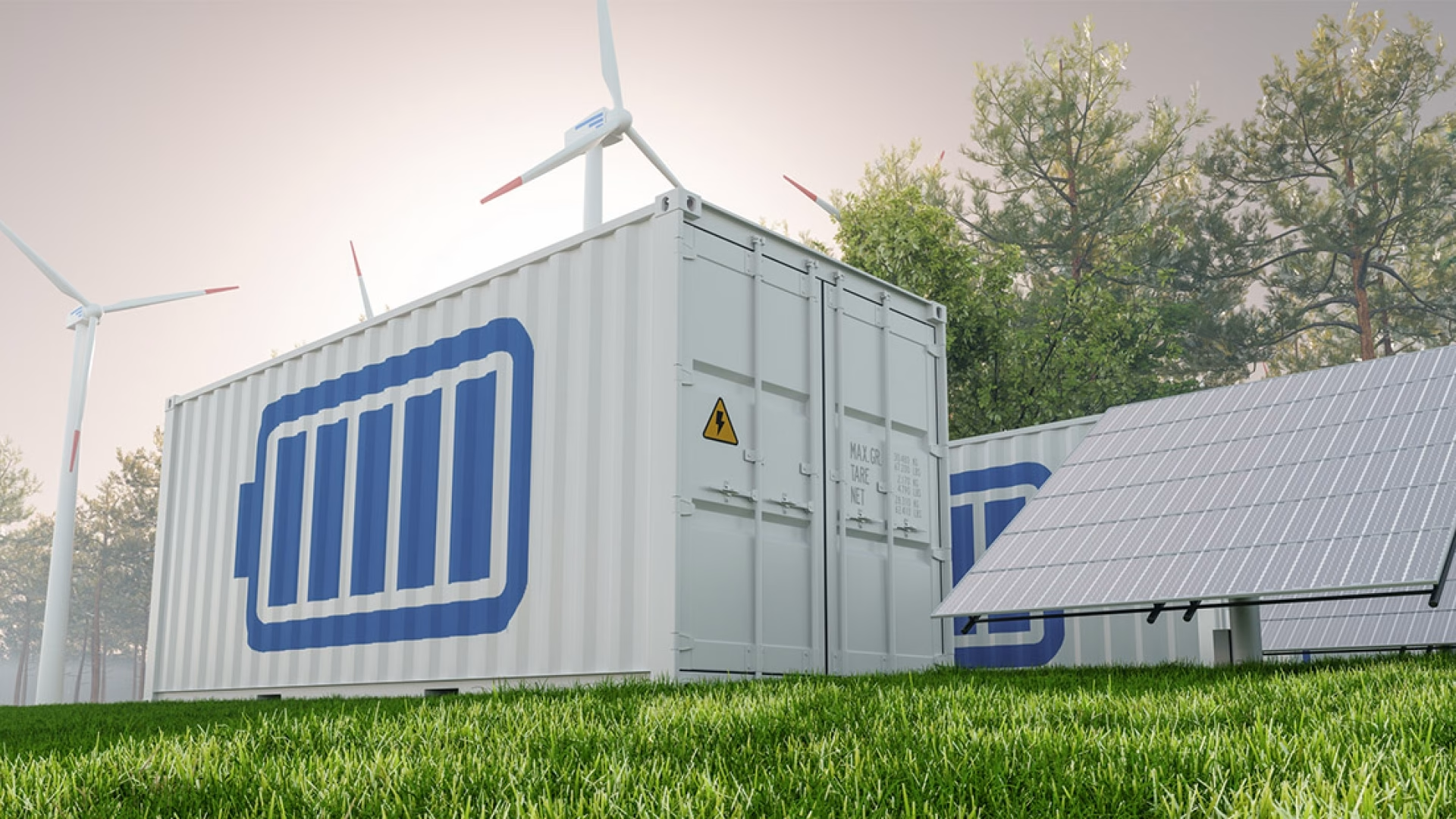
Battery Energy Storage Systems (BESS) are systems that store energy for later use, allowing for better management of energy supply and demand. These systems play a critical role in stabilizing the grid, integrating renewable energy sources, and ensuring a reliable energy supply. BESS technology continues to evolve, with lithium-ion batteries currently dominating the market due to their efficiency, cost-effectiveness, and scalability.
Key Drivers of the BESS Market
- Increased Demand for Renewable Energy: As countries transition to greener energy sources, the need for reliable energy storage solutions grows.
- Electric Vehicle (EV) Adoption: The rise of electric vehicles has driven demand for advanced battery technologies.
- Technological Advancements: Innovations in battery technology improve efficiency, reduce costs, and enhance performance.
- Government Incentives: Many governments are implementing policies aimed at promoting energy storage technologies.
China’s Battery Export Boom
Record Export Levels
According to reports from the General Administration of Customs of China, the country’s battery exports surged to record levels in the recent fiscal year. Notably, lithium-ion batteries accounted for a significant portion of this growth, with exports rising by over 80% compared to the previous year. Such dramatic increases have positioned China as a leader in the global battery market.
Factors Contributing to the Surge
- Global Supply Chain Demand: The pandemic highlighted vulnerabilities in global supply chains, leading to a spike in demand for reliable battery sources.
- Investment in Battery Manufacturing: China has heavily invested in expanding its battery manufacturing capabilities, making it a dominant player in the market.
- Partnerships with Global Manufacturers: Strategic partnerships with global EV manufacturers have spurred China’s exports.
- Technological Leadership: Chinese companies lead in lithium-ion technology and innovation, attracting international customers.
The Impact on the BESS Market
How China’s Battery Exports Influence Global Pricing
The rise in battery exports has multiple implications, especially concerning pricing in the BESS market. Increased competition in battery manufacturing can lead to cost reductions, allowing for broader adoption of energy storage systems. Conversely, potential supply chain disruptions in the future could reintroduce volatility in pricing.
Innovation and Technology Advancement
The focus on exporting batteries encourages continual innovation among Chinese manufacturers. Companies invest heavily in research and development to improve energy density, safety, and longevity, thus benefiting the entire BESS market.
Strengthening Supply Chains
With China ramping up battery exports, countries and companies are actively exploring more integrated supply chain strategies. For example, nations may establish local manufacturing hubs to procure batteries at a lower cost while adhering to sustainability goals.
Environmental Considerations
As global demand for batteries increases, so does scrutiny regarding the environmental impact of battery production and disposal. The BESS market must balance growth with sustainability, prompting manufacturers to adopt more eco-friendly practices.
Key Trends in the BESS Market
Increased Investment in Energy Storage Solutions
Investors are increasingly aware of the critical role of energy storage in supporting renewable energy sources. Thus, there’s a notable shift towards funding BESS projects and technologies.
Growth of Second-Life Battery Applications
As EV batteries reach the end of their market life, the potential for repurposing these batteries for energy storage applications is gaining traction. Second-life batteries provide a sustainable solution while maximizing resource use.
Decentralized Energy Models
Traditionally, energy has flowed from large power plants to consumers. However, decentralized models, often supported by BESS, allow consumers to become energy producers, enhancing grid stability and efficiency.
Regulatory Changes
While market conditions remain favorable for expansion, changes in governmental and regulatory frameworks can significantly impact the BESS sector. Policymakers globally are beginning to adapt regulations to facilitate BESS adoption.
Challenges Facing the BESS Market
Supply Chain Constraints
Despite the current boom, several challenges loom on the horizon. Supply chain disruptions, material shortages (especially for lithium and cobalt), and geopolitical tensions can impact the BESS market’s scalability.
Recycling and Waste Management
As the number of batteries produced increases, addressing recycling and waste management becomes critical. The BESS market must develop robust strategies to mitigate environmental impacts.
Competition for Raw Materials
The surge in demand for batteries globally creates intense competition for key raw materials, potentially leading to price hikes and supply shortages.
Future Outlook for the BESS Market
Market Projections
Market analysts project that the BESS market will grow exponentially over the next decade. Estimates suggest the market could reach multiple billions of dollars by 2030, driven by various factors, including the ongoing transition to renewable energy, rising demand for electric vehicles, and globalization of energy supply chains.
The Role of Policy and Regulation
Government incentives and initiatives will continue to shape the BESS market. Policies that emphasize sustainability and energy efficiency will be particularly influential in determining market growth trajectories.
Technological Innovations
Forward-looking companies are poised to invest in cutting-edge innovations, including solid-state batteries and more efficient recycling processes, allowing BESS technologies to evolve further and meet growing market needs.
Conclusion
The unprecedented growth in China’s battery exports has fueled the BESS market’s expansion, unlocking a myriad of opportunities for innovation and investment. As the world moves towards sustainable energy solutions and grapples with the challenges of a rapidly changing environment, the importance of energy storage solutions will only increase. It is essential for industry stakeholders, including manufacturers, policymakers, and consumers, to navigate the complexities of this evolving landscape thoughtfully.
Outgoing Links
- Battery Energy Storage Systems – Energy Storage Association
- China’s Lithium Battery Prosperity – Reuters
- Potential of Second-Life Batteries – National Renewable Energy Laboratory
External Links
- China Customs Statistics
- Global Battery Demand Insights – McKinsey & Company
- BESS Market Analysis – Tesla