


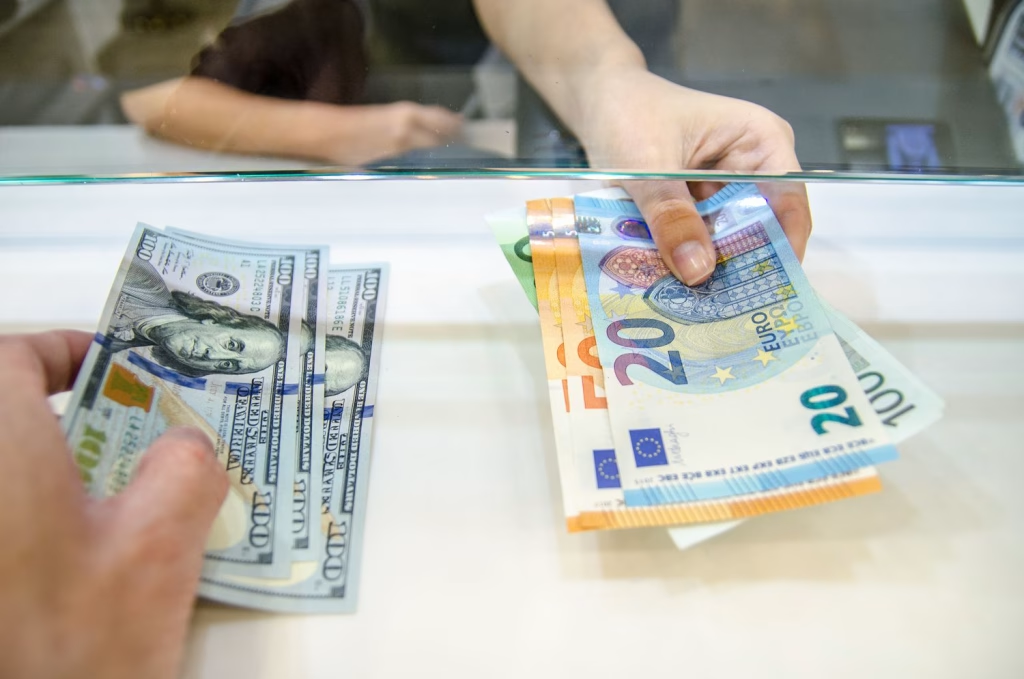
Currency trading, also known as forex trading, is the act of buying and selling currencies in the global marketplace. It is one of the most actively traded financial markets in the world, with a daily turnover of over $6 trillion. For investors, traders, and even corporations, currency trading offers a unique opportunity to profit from fluctuations in exchange rates.
If you’re new to currency trading or want to enhance your understanding, this guide will walk you through the fundamentals, benefits, risks, and how to start trading currencies with confidence.
What is Currency Trading?
Currency trading involves exchanging one currency for another. This is done in pairs—for example, EUR/USD (Euro/US Dollar), where the first currency is the base and the second is the quote currency. If you believe the euro will strengthen against the dollar, you buy EUR/USD. If the opposite occurs, you sell.
The goal is to profit from price changes due to geopolitical events, economic indicators, interest rates, and market sentiment.
How Does the Currency Market Work?
The currency market operates 24 hours a day, five days a week, due to its global nature. It is a decentralized, over-the-counter (OTC) market with no centralized exchange. Trades occur electronically through a network of banks, financial institutions, brokers, and individual traders.
The market is typically divided into three main sessions:
- Asian session (Tokyo)
- European session (London)
- North American session (New York)
These overlapping sessions offer traders the flexibility to trade at nearly any time of day.
Why Trade Currencies?
Here are a few reasons why currency trading is so popular:
- Liquidity: With high daily volume, it’s easy to buy or sell currencies.
- Leverage: Brokers offer leverage, allowing traders to control larger positions with smaller capital.
- Accessibility: Online platforms make it easy for anyone to participate.
- Low costs: Most brokers offer commission-free trading, earning instead from the spread.
Currency Pairs Explained
Currency pairs fall into three categories:
- Major pairs: The most traded pairs like EUR/USD, USD/JPY, GBP/USD.
- Minor pairs: Less liquid but still include strong currencies, such as EUR/GBP or AUD/CAD.
- Exotic pairs: Combine a major currency with a developing country’s currency, like USD/TRY or EUR/THB.
Beginners often start with major pairs due to lower spreads and higher liquidity.
Essential Terms in Currency Trading
- Pip: A unit of measurement for price changes in a currency pair.
- Spread: The difference between the bid (sell) and ask (buy) price.
- Leverage: Borrowed capital to amplify trades, e.g., 1:100 leverage.
- Margin: The deposit needed to open and maintain a leveraged position.
- Lot size: The amount you trade. Standard (100,000 units), mini (10,000), and micro (1,000).
Strategies for Successful Currency Trading
Developing a trading strategy is crucial. Here are some popular approaches:
- Scalping: Focuses on small profits through quick trades.
- Day Trading: Trades are opened and closed within a single day.
- Swing Trading: Positions are held for several days to capture trends.
- Position Trading: Long-term trades based on fundamental analysis.
Technical analysis (chart patterns, indicators) and fundamental analysis (news, economic reports) are commonly used to guide decisions.
Risks Involved in Currency Trading
While currency trading can be lucrative, it also comes with risks:
- Market volatility: Prices can change rapidly.
- Leverage risk: While leverage amplifies profits, it also increases potential losses.
- Emotional trading: Impulsive decisions can lead to losses.
- Lack of knowledge: Without education, traders can easily lose their capital.
Always start with a demo account and use risk management techniques like stop-loss orders and position sizing.
How to Get Started in Currency Trading
- Choose a Regulated Broker: Look for brokers regulated by authorities like FCA, ASIC, or NFA.
- Open a Demo Account: Practice with virtual funds before trading real money.
- Learn and Research: Understand technical and fundamental analysis.
- Set a Trading Plan: Define your goals, risk tolerance, and preferred strategies.
- Start Small: Begin with small trades and gradually increase as you gain experience.
Final Thoughts
Currency trading offers exciting opportunities in the global financial arena. With proper education, a well-developed strategy, and strong risk management, anyone can participate in this dynamic market. As you embark on your trading journey, remember to stay disciplined, keep learning, and always trade within your risk limits.
For more updates, visit https://tradingmarketsignals.com/