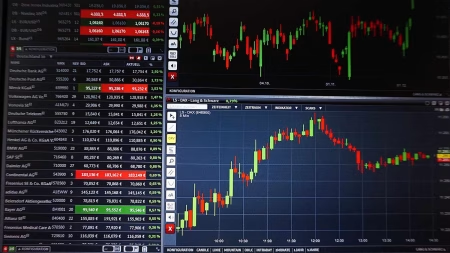





Forex for Beginners – The foreign exchange market, or forex, might sound complicated at first, but it’s one of the most accessible financial markets for beginners. With the right knowledge and preparation, anyone can begin trading currencies from anywhere in the world. This article is a complete forex guide for beginners, designed to simplify the learning process and set you on the path to trading success.
Here are 7 easy steps every beginner should take to understand and enter the forex market.
Forex for Beginners
1. Understand What Forex Trading Is
Forex trading is the act of buying and selling currencies with the goal of making a profit. Currencies are traded in pairs (like EUR/USD or GBP/JPY), and traders speculate on whether the value of one currency will rise or fall against the other.
Unlike stock markets, the forex market is decentralized, meaning there is no central exchange. Instead, trading takes place over-the-counter (OTC) through global financial networks.

2. Learn the Basic Terminology
Before jumping into the market, beginners must understand key forex terms:
- Pip: The smallest unit of price movement, usually 0.0001.
- Spread: The difference between the buy (ask) and sell (bid) price.
- Leverage: A tool that allows you to trade larger amounts with a smaller deposit.
- Margin: The required amount to open a leveraged position.
- Lot Size: The number of currency units in a trade (standard = 100,000 units).
These terms will appear regularly on trading platforms, so knowing them is crucial.
3. Choose the Right Forex Broker
Selecting a trustworthy and beginner-friendly forex broker is essential. Look for these key features:
- Regulation: Ensure the broker is licensed by authorities like the FCA, ASIC, or NFA.
- User-friendly platform: MetaTrader 4/5 is a popular choice among beginners.
- Low spreads and fees: These can significantly affect your profitability.
- Demo account: Allows you to practice trading with virtual money.
Research broker reviews, compare platforms, and make sure customer support is accessible.

4. Practice with a Demo Account
Before risking real money, it’s wise to practice on a demo account. This simulates real market conditions using virtual funds, helping you understand:
- How to place trades
- How price movements affect your balance
- How to use trading tools and indicators
- How to manage risk effectively
Practicing helps you build confidence without the emotional pressure of live trading.
5. Learn How to Analyze the Market
Forex trading is not about guessing—it’s about analysis. There are two main types:
- Technical Analysis: Uses historical price charts and indicators (moving averages, RSI, MACD) to predict future movements.
- Fundamental Analysis: Examines economic data (interest rates, employment reports, GDP) and global news that impact currencies.
Beginners should learn the basics of both to make informed decisions.
6. Start with a Simple Strategy
For beginners, it’s best to stick with a basic trading strategy while learning. Here’s an example:
- Use moving averages to identify the trend
- Trade in the direction of the trend
- Set stop-loss and take-profit levels
- Only risk 1–2% of your capital per trade
Avoid overcomplicating your strategy. Focus on consistency and improving over time.
7. Practice Proper Risk Management
Even experienced traders lose trades. The key is to manage risk properly:
- Use stop-loss orders: These limit your losses on a trade.
- Avoid overleveraging: While leverage can magnify profits, it can also increase losses.
- Set realistic goals: Don’t expect to get rich overnight. Forex trading is a marathon, not a sprint.
- Track your trades: Maintain a journal of your trades to review what worked and what didn’t.
Good risk management protects your capital and allows you to stay in the game longer.
Common Mistakes Beginners Should Avoid
- Trading without a plan: Always use a strategy and stick to it.
- Letting emotions drive decisions: Fear and greed lead to poor choices.
- Ignoring news events: Economic announcements can cause sudden volatility.
- Chasing losses: Trying to recover from a losing streak usually leads to more losses.
Learn from mistakes, but don’t let them discourage you.
Final Thoughts
Forex trading offers an exciting opportunity to make money in the global financial markets. For beginners, the key to success lies in education, practice, and patience. By following these 7 steps—understanding the basics, choosing the right broker, using a demo account, learning to analyze markets, applying a simple strategy, managing risk, and avoiding common mistakes—you can build a solid foundation in forex trading.
As you gain experience, you can refine your strategies, explore new methods, and develop your own trading style. Remember: consistent growth beats fast profits.
For more updates, visit https://tradingmarketsignals.com/