
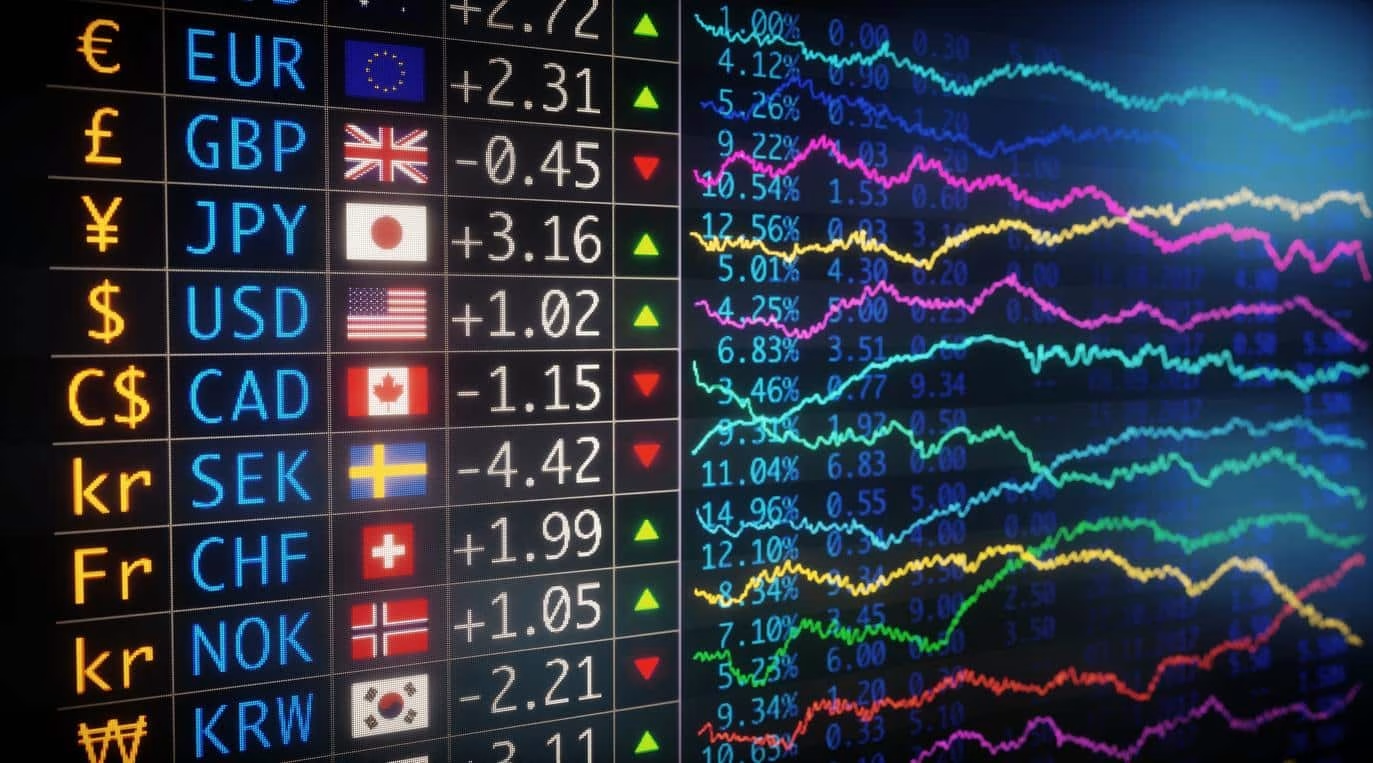

The forex market (foreign exchange market) is the world’s largest and most liquid financial marketplace. With a staggering daily turnover of over $6 trillion, it dwarfs stock and commodity markets. Unlike traditional exchanges, the forex market operates 24 hours a day, offering non-stop trading opportunities to participants across the globe.
Whether you’re an aspiring trader or simply curious about global finance, understanding how the forex market works is essential. This guide outlines 7 key facts that will help you grasp the basics and explore how you can benefit from trading currencies.
1. What is the Forex Market?
The forex market is a global decentralized marketplace where currencies are bought and sold. It is primarily used for international trade, investments, tourism, and hedging against currency risks. However, it’s also a speculative market where traders aim to profit from the fluctuations in currency exchange rates.
Unlike stock markets, there’s no central exchange. Instead, all trading is conducted electronically over-the-counter (OTC), connecting banks, brokers, hedge funds, corporations, and retail traders.
2. The Forex Market is Open 24 Hours a Day
One of the major advantages of the forex market is its round-the-clock availability, from Monday morning in Sydney to Friday evening in New York. The market is divided into four main trading sessions:
- Sydney (Asia-Pacific)
- Tokyo (Asia)
- London (Europe)
- New York (North America)
This rolling schedule ensures that at least one market is open at all times, offering unmatched flexibility and liquidity.
3. Currency Pairs: The Building Blocks
Currencies are traded in pairs, such as EUR/USD (Euro/US Dollar) or USD/JPY (US Dollar/Japanese Yen). The first currency in the pair is called the base, and the second is the quote. When you buy a pair, you are buying the base currency and selling the quote.
Forex pairs are grouped into:
- Major pairs: Most traded, e.g., EUR/USD, GBP/USD
- Minor pairs: Less liquid, e.g., EUR/GBP, CAD/JPY
- Exotic pairs: One major and one emerging currency, e.g., USD/TRY
4. Who Participates in the Forex Market?
The forex market is vast and diverse, with participants including:
- Central Banks: Influence currency supply and interest rates.
- Commercial Banks: Facilitate large-scale transactions.
- Corporations: Engage in forex for international business operations.
- Hedge Funds and Institutional Investors: Trade for profit and hedging.
- Retail Traders: Individual traders using online platforms to speculate.
Each participant has unique motivations, which contributes to the dynamic nature of the forex market.
5. How Prices Are Determined
Forex prices are influenced by supply and demand, which in turn are affected by:
- Economic indicators: GDP, employment rates, inflation
- Central bank policies: Interest rate decisions, monetary policy
- Geopolitical events: Elections, wars, trade agreements
- Market sentiment: Risk appetite or aversion among traders
This constant flow of news and data creates price volatility—ideal for traders seeking profit opportunities.
6. Benefits of Trading in the Forex Market
There are several reasons why millions of traders are drawn to the forex market:
- High Liquidity: Easy to enter and exit positions.
- Low Costs: Most brokers offer tight spreads and no commissions.
- Leverage: Amplify your exposure with small initial capital.
- Accessibility: Start trading from anywhere using online platforms.
Forex also offers both upward and downward trading opportunities, meaning you can profit whether currencies rise or fall.
7. Key Terms You Should Know
To navigate the forex market effectively, you need to understand basic terminology:
- Pip: Smallest price movement, usually 0.0001 for most pairs.
- Spread: The difference between the bid and ask price.
- Lot Size: Standard (100,000 units), mini (10,000), and micro (1,000).
- Leverage: Borrowed capital to control larger trades.
- Margin: The amount required to maintain a leveraged position.
Familiarity with these terms helps you manage trades, calculate risk, and understand broker conditions.
Final Thoughts
The forex market is a dynamic and global platform for currency exchange, offering high liquidity, low barriers to entry, and 24/5 accessibility. By understanding how it operates and what drives its movements, you can better position yourself for trading success.
Whether you’re just starting or looking to refine your skills, mastering the fundamentals of the forex market is the first step toward becoming a confident and profitable trader.
For more updates, visit https://tradingmarketsignals.com/