


Forex Trading Strategies – Mastering the forex market requires more than just understanding how currency pairs work. To succeed in this fast-paced environment, you need a reliable game plan—known as a forex trading strategy. A well-defined strategy helps traders make logical decisions, manage risk, and increase profitability.
In this article, we’ll explore 7 proven forex trading strategies. Whether you’re a beginner or an experienced trader, these methods can help you navigate the forex market with confidence.


Forex Trading Strategies
1. Scalping Strategy
Scalping is one of the most popular short-term trading strategies in forex. It involves making dozens or even hundreds of trades per day to capture small price movements.
- Timeframe: 1 to 5 minutes
- Goal: Gain small profits repeatedly
- Best for: Traders with quick decision-making and strong discipline
Scalping requires a stable internet connection, lightning-fast execution, and a reliable broker with low spreads.


2. Day Trading Strategy
Day trading involves opening and closing all positions within a single trading day. Unlike scalping, it focuses on capturing larger intraday price movements.
- Timeframe: 15 minutes to 1 hour
- Goal: Profit from short-term market moves
- Best for: Traders available during market hours
Day trading is ideal for avoiding overnight risks and takes advantage of market volatility during the London and New York sessions.
3. Swing Trading Strategy
Swing trading is a medium-term strategy that aims to capture price swings over several days or weeks. Traders often use technical indicators like moving averages, RSI, or Fibonacci retracements.
- Timeframe: 4 hours to daily charts
- Goal: Ride market trends or corrections
- Best for: Part-time traders who want more flexibility
It requires less screen time compared to scalping or day trading but demands strong analytical skills and patience.

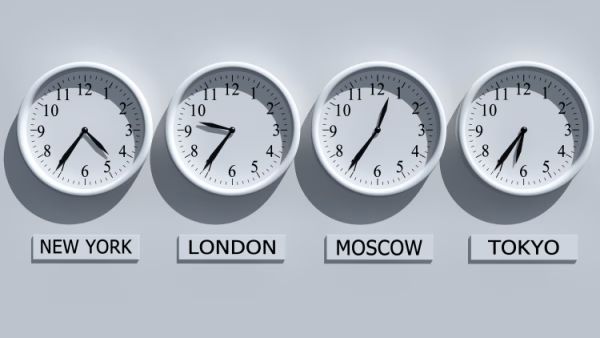
Forex Trading Strategies
4. Position Trading Strategy
Position trading is a long-term approach where traders hold positions for weeks, months, or even years. It’s based primarily on fundamental analysis—economic reports, interest rates, geopolitical events—and long-term market trends.
- Timeframe: Daily to weekly charts
- Goal: Capture major price movements
- Best for: Long-term investors and those who prefer low-frequency trading
Position trading involves fewer trades but larger potential rewards and risks.
5. Trend Following Strategy
Trend following means trading in the direction of the prevailing market trend. “The trend is your friend” is a popular saying among traders for a reason. Tools like moving averages, MACD, and ADX help confirm trends.
- Timeframe: Any (scalping to long-term)
- Goal: Enter and stay in the trade while the trend lasts
- Best for: Traders who can manage trades over time
This strategy works best in strong trending markets but may underperform in ranging conditions.


6. Breakout Strategy
A breakout strategy involves entering the market when the price breaks above resistance or below support levels. Breakouts often lead to sharp price movements due to high trading volume.
- Timeframe: 15 minutes to 1 hour
- Goal: Catch big moves at the start of new trends
- Best for: Active traders who follow news and price action
Breakout traders use tools like Bollinger Bands or triangle patterns to identify potential breakouts.
7. Range Trading Strategy
Range trading focuses on buying at support and selling at resistance within a sideways market. Traders use oscillators like RSI or Stochastic indicators to identify overbought or oversold conditions.
- Timeframe: 1 hour to daily charts
- Goal: Profit from price oscillation within a defined range
- Best for: Traders who excel at technical analysis and timing
This method works well in stable markets with low volatility but should be avoided during news releases or major events.
Tips for Choosing the Right Forex Trading Strategy
- Know your personality: Are you patient or do you prefer quick trades?
- Assess your schedule: Full-time traders can scalp or day trade, while part-timers may prefer swing or position trading.
- Test your strategy: Use demo accounts to backtest before going live.
- Manage risk: Always use stop-loss orders and maintain a favorable risk-reward ratio.
- Stay disciplined: Stick to your plan and avoid emotional decisions.
Final Thoughts
There is no one-size-fits-all approach to trading forex. The best strategy for you depends on your goals, risk tolerance, and time availability. Whether you’re scalping for quick gains or holding positions for the long term, understanding these 7 strategies gives you the tools to navigate the forex market more effectively.
Remember, consistent success in forex trading comes from a blend of strategy, risk management, and emotional discipline. Start small, learn continuously, and grow your skillset one trade at a time.
For more updates, visit https://tradingmarketsignals.com/