


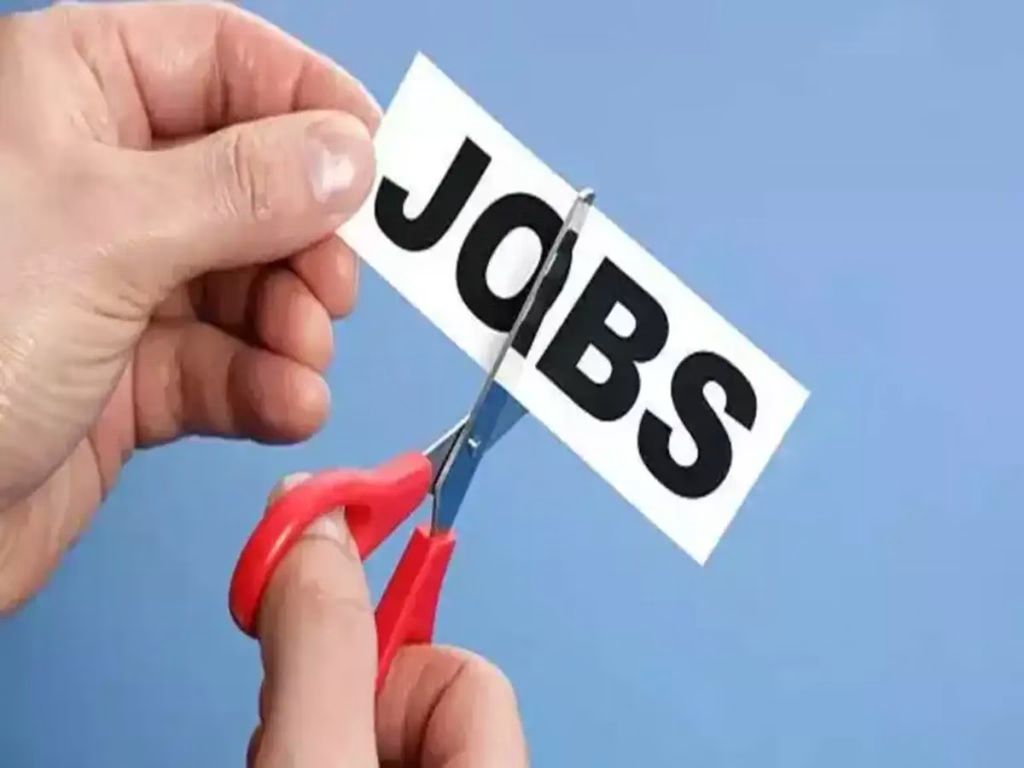
The United States is slated to cut 317,000 government jobs in 2025, triggering major concerns across economic, political, and social landscapes. As the federal workforce faces deep reductions, the ramifications could extend far beyond the immediate budgetary savings—impacting local economies, service delivery, and the future of public administration.
Here, we delve into the driving forces behind this massive downsizing, the implications for workers and taxpayers, and what investors and citizens should watch going forward.
1. What’s Behind the Plan to Cut 317,000 Federal Jobs
1.1 The Department of Government Efficiency (DOGE) Initiative
At the heart of these job cuts is a controversial new agency dubbed the Department of Government Efficiency (DOGE). Spearheaded by the current administration, DOGE’s mandate is to slash what it calls “bloat” in federal agencies, targeting redundancies, excessive contracts, and grant spending. Forbes+2Forbes+2
The plan reportedly includes deep cuts across dozens of federal agencies, achieved through buyouts, forced resignations, and reduced replacement hiring. Forbes
1.2 Deferred Resignation Program (DRP)
One of the key tools being used to drive job reductions is the Deferred Resignation Program (DRP). Under this program, more than 150,000 federal employees were offered full pay to resign by the end of 2025. Wikipedia
Although initially challenged in court, the DRP has become a central component of the workforce reduction strategy. Forbes+1
1.3 Targeted Probationary Cuts
The administration is also targeting probationary federal employees—those early in their service—for termination. According to reports, up to 300,000 of these less-tenured workers could be cut. Forbes
This aggressive approach attempts to reshape the workforce from the bottom up, making it leaner and more performance-focused.
1.4 Broader Agency Restructuring
Some agencies are being significantly reorganized. For example, the U.S. Department of Health and Human Services (HHS) plans to reduce its workforce dramatically, governing both voluntary and involuntary exits. Wikipedia
Other major agencies such as the State Department and EPA are also seeing cuts—reorganizations, job eliminations, and reassignment of staff have already been reported. Forbes
2. Are These Cuts Realistic? What the Numbers Say
2.1 Layoff Data & Official Projections
According to a recent Challenger, Gray & Christmas report, 275,240 job cuts were announced in March 2025 alone, with 216,670 of those coming from DOGE-related federal workforce reductions. Fed Prime Rate
These cuts are not isolated. Earlier in the year, February layoffs surged to 172,017 across sectors, including tens of thousands of government workers. Forbes+1
2.2 Budget Impact & Long-Term Savings
A policy paper by the Economic Policy Innovation Center (EPIC) estimates that reducing the federal workforce by 10% could save between $559 to $608 billion in salary and benefits from 2025 to 2035. EPIC for America
These projected savings fuel part of the political rationale—but they also come with deeper questions about operational capacity and institutional knowledge loss.
3. Economic and Local Impact: Why This Matters Beyond Washington
3.1 Effects on Local Economies
Federal jobs aren’t just numbers on a ledger—they employ communities. According to a Federal Reserve Bank of Richmond study, while the U.S. federal workforce accounts for a small percentage of total employment, layoffs can still trigger negative “multiplier effects” in local economies. Federal Reserve Bank of Richmond
The same study found that reductions in federal payroll can reduce demand for local services, though so far the impact has been more limited than might be expected due to strong labor market conditions elsewhere.
3.2 Loss of Institutional Expertise
Long-term federal employees often hold deep institutional knowledge. According to Forbes, this wave of cuts risks a “brain drain,” with agencies potentially losing critical skill sets in public administration, science, national defense, and more. Forbes
Experts worry that many essential public services could suffer as experienced workers are replaced—or not replaced at all.
3.3 Privatization and Automation Risks
Some analysts view the workforce cuts as a strategic push towards greater privatization or automation of government functions. According to Brookings, this restructuring could shift more operations into private hands or rely on AI-driven systems—a move that raises concerns around accountability, data security, and the equitable delivery of public services. Brookings
4. Political and Social Fallout
4.1 Public Service Pushback
Federal employee unions, watchdog organizations, and advocacy groups are pushing back against what they call “reckless downsizing.”
Key concerns include reduced capacity in regulatory agencies, weakened oversight, and a lack of transparency around how cuts are being implemented.
4.2 Social Equity Considerations
Some of the workforce reductions disproportionately affect lower-paid or more junior employees. Combined with the DRP and forced resignations, the cuts may exacerbate inequality by targeting people less able to weather job loss.
4.3 Legislative & Legal Challenges
Court challenges have already slowed parts of the layoff strategy, particularly around probationary employee terminations. Fox Business
Additionally, the long-term political viability of these cuts depends on budget outcomes, public reaction, and future administrative priorities.
5. Potential Upsides & Efficiency Arguments
5.1 Reducing Waste & Improving Efficiency
Proponents argue that the federal workforce was bloated and that some functions can be made more efficient—especially with better technology and streamlined processes.
5.2 Fiscal Sustainability
Given ever-increasing federal liabilities, especially in pension and health costs, reducing headcount may be one of the few politically viable ways to contain long-term spending. The EPIC paper suggests significant savings by cutting staffing costs. EPIC for America
5.3 Focus on Core Functions
The cuts may force agencies to prioritize mission-critical work, shifting away from lower-priority administrative tasks or redundant roles.
6. Risks & Challenges Going Forward
While the financial case for cutting jobs is strong, there are real risks:
- Service Disruption: Essential public services could suffer due to staff shortages or lack of expertise.
- Loss of Diversity: Rapid reductions could disproportionately affect certain demographics within the workforce.
- Legal Risks: Ongoing lawsuits or labor union actions could slow or reverse cuts.
- Operational Capacity: Agencies might struggle with capacity, hindering their ability to respond to crises, enforce regulations, or deliver public goods.
- Backlash: Local communities that rely heavily on federal employment could push back politically, especially if the cuts harm economic stability.
7. What This Means for Investors and Citizens
7.1 For Investors
- Federal contractors may see reduced opportunities as government staffing shrinks.
- Tech firms working on AI/automation could benefit if the government outsources more work.
- Real estate and regional markets in areas with heavy federal employment may feel the pinch if job losses are sustained.
7.2 For Citizens
- Service Quality: Residents may face slower bureaucratic processing, fewer staff, and longer wait times.
- Local Jobs: Communities with high proportions of federal workers—especially in rural areas—are at risk of economic decline.
- Taxpayer Impact: Long-term budget savings could benefit taxpayers, but only if cuts are implemented wisely and without compromising service quality.
8. How the 317,000-Job Cut Estimate Came About
The widely cited figure of 317,000 government job cuts is based on a combination of:
- DOGE Targets: Internal plans and executive directives from the Department of Government Efficiency.
- Challenger Reports: Public layoff data showing federal reductions in multiple months. Fed Prime Rate
- Deferred Resignations: Hundreds of thousands opting into the voluntary DRP program. Wikipedia
- Budget Projections: Analysis by policy organizations like EPIC, which model various cut scenarios over the next several years. EPIC for America
While not all 317,000 cuts may happen immediately or through layoffs (some will be voluntary), the cumulative effect is likely to be profound.
9. The Road Ahead: What to Watch
To understand how these cuts evolve, observers should track:
- Monthly job-cut reports (especially from recruitment and outplacement firms)
- Court rulings on probationary worker terminations
- Agency reorganization announcements (e.g., HHS, EPA, State)
- Economic briefings on local impact from institutions like the Richmond Fed Federal Reserve Bank of Richmond
- Legislation or executive orders related to workforce or AI/automation strategy
- Public sector efficiency reports, scrutinized by independent think tanks and watchdog groups
10. Conclusion: A High-Stakes Gamble on Efficiency
The plan to cut 317,000 government jobs in 2025 is arguably one of the most ambitious attempts to shrink the U.S. federal workforce in decades. While the potential budgetary savings are substantial, the risks—both operational and social—are significant.
On one hand, the cuts align with an agenda of efficiency, fiscal restraint, and government streamlining. On the other, they threaten institutional knowledge, displace hundreds of thousands of workers, and could lead to long-term performance challenges.
As this plan unfolds, the balance between cost savings and public service effectiveness will be tested. For ongoing analysis and insights into how macroeconomic trends affect markets, visit TradingMarketSignals.com—your go-to source for policy-driven trading intelligence.