
Oil prices hormuz crisis fears sent crude soaring on Thursday as WTI jumped over 11% and Brent surged nearly 8%, marking one of the most dramatic single-day moves in energy markets since 2020. With U.S. stock markets closed for Good Friday on April 3, 2026, traders are left processing a volatile week dominated by geopolitical uncertainty in the Middle East and the ongoing closure of the Strait of Hormuz.

Oil Prices Hormuz Crisis: What Triggered Thursday’s Massive Rally
U.S. West Texas Intermediate (WTI) crude futures settled at $111.54 per barrel, up $11.42 or 11.41% — the biggest absolute daily price rise since 2020. Brent crude closed at $109.03 per barrel, gaining $7.87 or 7.78%. Both benchmarks remain below the highs near $120 touched earlier in the conflict but are signaling that the energy market is far from stabilizing.
The catalyst was President Trump’s Wednesday evening address, where he vowed to intensify military operations against Iran over the next two to three weeks. Critically, he offered no timeline or plan for reopening the Strait of Hormuz — the narrow waterway through which approximately 20% of global oil and liquefied natural gas transits.
“We’re going to hit them extremely hard over the next two to three weeks,” Trump said during his prime-time speech. The aggressive rhetoric, combined with the absence of any diplomatic resolution for the strait, sent crude prices into a frenzy during Thursday’s session.
Why the Strait of Hormuz Matters for Global Energy Markets
The Strait of Hormuz is arguably the most strategically important chokepoint in global energy infrastructure. Connecting the Persian Gulf to the Gulf of Oman and the broader Indian Ocean, it handles roughly 20 million barrels of oil per day under normal conditions — about one-fifth of global consumption.
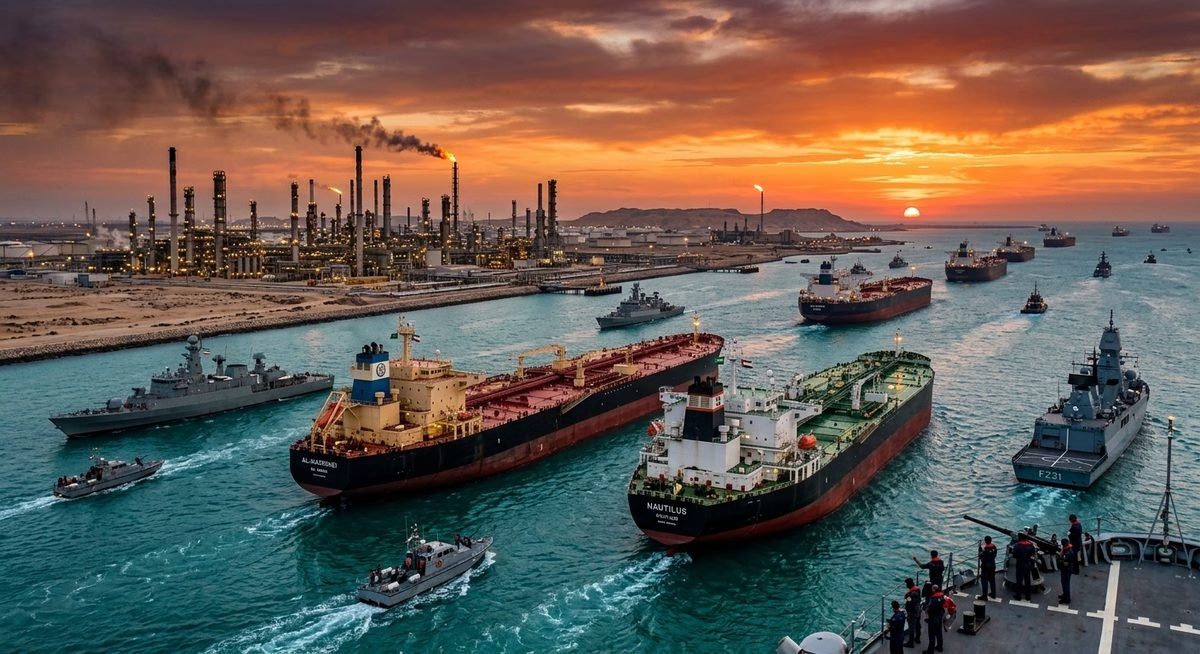
Iran effectively shut down the waterway in late February 2026 in retaliation for U.S.-Israeli strikes that began on February 28. Since then, Iran has attacked civilian ships and energy infrastructure in the region, bringing traffic through the strait to a near standstill. The closure has been described by analysts as the largest disruption to global energy supply since the 1970s oil crisis.
Countries most affected include Japan, South Korea, India, and several European nations that depend heavily on Gulf oil imports. While the United States imports almost no oil through the Hormuz Strait — a point Trump emphasized — the global nature of oil pricing means American consumers still feel the impact at the gas pump. For more on how energy disruptions affect broader markets, see our analysis on Intel Fab Buyback: $14.2 Billion Deal Reshapes AI Chip Manufacturing.
Wall Street Price Forecasts: Could Oil Hit $200?
Wall Street analysts are scrambling to revise their forecasts upward as the crisis drags on. Here’s what major institutions are projecting:
- JP Morgan: Oil could climb to $120-$130 per barrel in the near term, and above $150 if the strait remains closed into mid-May.
- Citi: Base case of $95/barrel average for H2 2026, bull case of $130/barrel.
- Axios analysts: Worst-case scenario of $200/barrel if the closure becomes prolonged through summer.
Dennis Kissler, senior vice president of trading at BOK Financial, noted that “the real question on traders’ minds is whether Iran’s oil infrastructure is now at risk, and with more damage in the area very likely, even if left intact, the restart of oil flows is now looking to be delayed further.”
An unusual market signal emerged Thursday: WTI was pricing nearly $3 above Brent — the reverse of its typical discount. This reflects near-term delivery anxiety in the May contract versus Brent’s June contract, and marks the widest WTI premium over the global benchmark in a year.
Stock Market Closed for Good Friday: What It Means for Traders
With the NYSE, Nasdaq, and all major U.S. exchanges closed for Good Friday on April 3, investors face an unusually long weekend to digest the implications. Markets won’t reopen until Monday, April 6, creating a gap during which geopolitical developments could dramatically shift sentiment.
Despite the oil shock, U.S. equities managed to snap a five-week losing streak this week. The S&P 500 and Dow Jones both posted gains, buoyed by two consecutive days of sharp rallies on Tuesday and Wednesday before Thursday’s oil-driven volatility hit.
The energy sector told a different story. Energy stocks surged alongside oil prices, with companies across the S&P 500 Energy sector posting significant gains. Meanwhile, sectors sensitive to fuel costs — airlines, transportation, and consumer discretionary — came under renewed pressure. For a look at how different sectors have been performing, check out our report on S&P 500 Earnings Season Preview: Why Q1 2026 Could Reignite the Rally.
The Federal Reserve’s Inflation Dilemma
Federal Reserve Bank of Dallas President Lorie Logan addressed the situation on Thursday, suggesting that a swift war resolution could mean the economic impact remains “pretty moderate.” However, she acknowledged the economic outlook has become deeply uncertain.

The oil price spike creates a classic policy dilemma for the Federal Reserve. Higher energy prices feed directly into inflation — both through gasoline costs and through the production and transportation costs embedded in virtually every consumer good. Simultaneously, an energy price shock acts as a tax on consumers and businesses, potentially slowing economic growth.
Markets are currently pricing in a delayed rate-cutting cycle, with traders expecting the Fed to hold rates steady until there’s clarity on the energy situation. According to Reuters, the Fed is watching developments closely but is not yet ready to alter its policy trajectory.
Iran’s Diplomatic Signals: A Glimmer of Hope?
Not all the news was negative for those hoping for resolution. Reports emerged Thursday that Iran is drafting a protocol with Oman to monitor traffic in the Strait of Hormuz — a potential first step toward limited reopening. Bloomberg’s analysis noted this development briefly caused prices to dip before Trump’s speech reversed the move.
John Kilduff, partner at Again Capital, offered a cautiously optimistic take: “The market’s expectation is that if the Strait of Hormuz opens up in a couple of weeks, this risk premium will immediately go down.” Whether that timeline is realistic given the escalating military rhetoric remains the central question.
British Prime Minister Keir Starmer hosted a videoconference with world leaders on Thursday to discuss the Hormuz situation, according to The Washington Post. International pressure to find a diplomatic solution is mounting as energy prices strain economies worldwide.
What Investors Should Watch When Markets Reopen
When trading resumes on Monday, April 6, several factors will drive market direction:
- Weekend geopolitical developments: Any military escalation or diplomatic breakthrough over the Easter weekend could cause a significant gap opening on Monday.
- Iran-Oman protocol progress: Concrete steps toward the Hormuz monitoring agreement could provide relief to energy markets.
- U.S. oil rig count: Baker Hughes reported rigs rose by two to 411 this week. Higher prices may incentivize more domestic drilling, though producers want sustained levels before committing capital.
- Strategic Petroleum Reserve: Any announcements about SPR releases could temporarily ease supply concerns.
- WTI-Brent spread dynamics: WTI’s unusual premium over Brent reflects near-term delivery stress and could signal further volatility ahead.
For additional market context and trading insights, explore our coverage on Tech Sector Losing Streak Hits 5 Months: Worst Slide Since 2002 Explained.
The Bigger Picture: A New Era for Energy Markets
This crisis is fundamentally reshaping the global energy landscape. Countries are accelerating plans to diversify away from Gulf oil dependence, with renewable energy investments seeing a notable boost. U.S. shale producers are positioned to benefit from sustained high prices, though the industry has maintained discipline about not over-expanding in recent years.
The oil prices hormuz crisis also raises serious questions about the effectiveness of strategic petroleum reserves globally. The U.S. SPR has already been drawn down significantly, limiting the government’s ability to flood the market with emergency supplies if the situation deteriorates further.
For long-term investors, the key takeaway is that energy market volatility will likely persist well beyond any ceasefire. Even once the strait reopens, infrastructure damage and security concerns will maintain a risk premium that could keep oil prices elevated for months. The 1970s oil crisis reshaped the global economy for a decade — and some analysts warn we could be at a similar inflection point today.
Markets are closed for Good Friday on April 3, 2026. Trading resumes Monday, April 6. Stay tuned to TradingMarketSignals for comprehensive coverage when markets reopen.