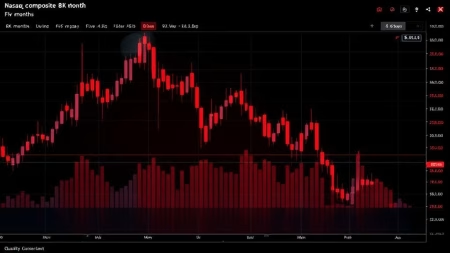


The energy stocks oil surge has become the defining story of March 2026, as escalating Middle East tensions send crude oil prices above $90 per barrel for the first time since September 2023. While the broader market reels from a toxic combination of geopolitical uncertainty and a dismal jobs report, energy companies are posting some of their strongest gains in years. Investors are now scrambling to understand which energy stocks stand to benefit most — and how long this rally can last.
With Brent crude briefly touching $94 and WTI surging 12.2% to $90.90 in a single week, the energy sector has emerged as a rare bright spot in an otherwise turbulent market environment. The S&P 500 Energy sector has outperformed every other sector this month, driven by supply fears centered on the Strait of Hormuz, through which roughly 20% of global oil supply flows daily.
Why the Energy Stocks Oil Surge Is Different This Time
Oil price spikes tied to geopolitical events are nothing new. The market saw similar disruptions during the 2022 Russia-Ukraine conflict and earlier Middle East crises. However, the current energy stocks oil surge carries unique characteristics that set it apart from previous episodes.

First, the Strait of Hormuz threat is more tangible than past supply disruptions. Iran claimed to have attacked a tanker in the strait, and the U.S. government responded by announcing an insurance program for ships crossing the waterway. This is not merely theoretical risk — it represents active disruption to one of the world’s most important energy chokepoints.
Second, the timing coincides with an unexpectedly weak U.S. jobs report that showed employers cut more jobs than they created last month. This raises the specter of stagflation — a stagnating economy combined with rising inflation — which historically benefits commodity producers while crushing growth stocks.
Third, energy companies entered this crisis in far better financial shape than in previous oil booms. Years of capital discipline following the 2020 oil crash mean major producers have lower debt, higher free cash flow, and more room to return capital to shareholders through dividends and buybacks.
Top Energy Stocks Leading the Rally
Several major energy companies have emerged as the primary beneficiaries of the oil price surge. Here’s how the biggest names are performing and what analysts expect going forward:
Exxon Mobil (XOM)
ExxonMobil has been one of the strongest performers during the energy stocks oil surge, trading higher as investors rotate into what some call “Old Economy” stocks. The company’s integrated business model — spanning upstream production, refining, and chemicals — gives it multiple ways to benefit from elevated oil prices. Analysts at Reuters note that Exxon’s breakeven price sits well below $60 per barrel, meaning current prices translate directly into outsized profits.
Chevron (CVX)
Chevron has similarly rallied, benefiting from its significant exposure to both U.S. shale production and international operations. The company’s recent acquisition pipeline and strong dividend yield make it particularly attractive to investors seeking both growth and income in an uncertain market. With oil above $90, Chevron’s free cash flow could exceed $35 billion annualized.
Occidental Petroleum (OXY)
Warren Buffett’s favorite energy bet continues to gain ground. Occidental Petroleum, in which Berkshire Hathaway holds a substantial stake, is leveraged more heavily to U.S. oil prices than its larger peers. This makes OXY one of the most sensitive plays on the current oil price surge tied to the Iran conflict.
Halliburton (HAL) and Schlumberger (SLB)
Oil services companies are also benefiting as higher prices incentivize increased drilling activity. If oil remains above $85 for an extended period, these companies could see significant upticks in contract values and rig counts, particularly in the Permian Basin and Gulf of Mexico.

The Stagflation Risk: Why Energy Stocks May Keep Outperforming
The combination of surging oil prices and a weakening labor market has traders increasingly worried about stagflation. Brian Jacobsen, chief economic strategist at Annex Wealth Management, warned that “a negative payrolls number combined with a big jump in oil prices will have traders worrying about stagflation risks.”
In a stagflationary environment, the Federal Reserve faces an impossible choice. Cutting interest rates would stimulate the economy but risk fueling inflation further. Raising rates would combat inflation but crush an already weakening job market. This policy paralysis tends to benefit real assets — particularly energy stocks and commodities — while punishing growth-oriented technology shares.
Historical data supports this view. During the stagflationary period of the 1970s, energy stocks were among the top-performing sectors, while the broader market struggled. More recently, the crash in Asian stocks amid Iran war fears highlights how vulnerable non-energy sectors are to the current macro environment.
How High Can Oil Go? Key Price Levels to Watch
The trajectory of energy stocks depends heavily on where oil prices settle in the coming weeks. Here are the key levels analysts are monitoring:
- $85-90 range: This is the current floor. If oil holds here, energy stocks should maintain their gains but may consolidate. This level is already priced into most energy company forecasts.
- $95-100 range: A move above $95 would trigger another leg higher for energy stocks but could begin to weigh significantly on consumer spending and transportation costs. Airlines and logistics companies would face serious margin pressure.
- Above $100: Several analysts have warned that sustained prices above $100 per barrel could tip the global economy into recession. According to The Guardian, the scale of disruption to Hormuz traffic and potential attacks on energy infrastructure will determine whether prices reach this level.
Risks for Energy Investors
Despite the bullish setup, energy investors should remain aware of several risks that could reverse the current rally:
Diplomatic Resolution: Any de-escalation in the Middle East could cause a sharp reversal in oil prices. President Trump has signaled he wants “unconditional surrender” from Iran, seemingly ruling out negotiations for now, but geopolitical situations can shift rapidly.
U.S. Strategic Petroleum Reserve: The U.S. government could release strategic reserves to cap oil prices, as it did during the 2022 energy crisis. Treasury Secretary Bessent has already announced a waiver allowing India to purchase Russian oil stranded by sanctions, indicating the administration is exploring supply-side relief.
Demand Destruction: At some point, high oil prices become self-correcting. Consumers drive less, businesses cut back, and the economy slows enough to reduce demand. A separate report released Friday showed U.S. retailers made less money in January than expected, raising concerns that consumer spending may already be near its maximum.
Renewable Energy Rotation: Paradoxically, sustained high oil prices can accelerate investment in renewable energy and electric vehicles, gradually reducing the long-term demand for fossil fuels. This is a slower-moving risk but one that weighs on long-term energy valuations.
How to Position Your Portfolio for the Energy Rally
For investors looking to capitalize on the energy stocks oil surge, here are several strategies to consider based on risk tolerance:
Conservative approach: Focus on integrated majors like ExxonMobil and Chevron, which offer dividend yields above 3% and have diversified revenue streams that provide downside protection even if oil prices retreat. These companies also have the balance sheet strength to weather volatility.
Moderate approach: Add exposure to midstream companies like Enterprise Products Partners (EPD) or Kinder Morgan (KMI). These pipeline operators benefit from higher throughput volumes during supply disruptions and tend to be less volatile than exploration and production companies.
Aggressive approach: Consider oil services companies like Halliburton and Schlumberger, or smaller E&P names like Devon Energy (DVN) and Pioneer Natural Resources. These offer higher beta exposure to oil prices but carry more risk if prices reverse.
Energy ETFs like the Energy Select Sector SPDR Fund (XLE) or the SPDR S&P Oil & Gas Exploration ETF (XOP) provide diversified exposure for investors who prefer not to pick individual stocks.
The Week Ahead: What Energy Investors Should Watch
The coming week will be pivotal for energy markets and the broader market alike. Key events to monitor include:
- Iran conflict developments: Any escalation or de-escalation around the Strait of Hormuz will be the primary driver of oil price direction.
- CPI data (Wednesday): The Consumer Price Index report will show whether rising energy costs are already feeding into broader inflation numbers.
- Fed commentary: With the central bank caught between inflation and employment mandates, any signals on rate policy will move markets significantly.
- OPEC+ response: Whether major producers adjust output in response to the supply disruption could add or relieve price pressure.
The energy stocks oil surge of March 2026 represents both an opportunity and a warning signal for the broader economy. While energy investors enjoy a rare moment of outperformance, the underlying drivers — war, supply disruption, and stagflation risk — suggest this is no ordinary rally. Positioning carefully and managing risk will be essential as the situation continues to evolve in the weeks ahead.