
The SP500 earnings outlook heading into the second quarter of 2026 remains remarkably resilient. Despite five weeks of armed conflict in Iran, rising oil prices, and mounting geopolitical uncertainty, analysts at FactSet project that S&P 500 companies will deliver approximately 13% earnings growth for Q1 2026 — marking a sixth consecutive quarter of double-digit gains. For investors trying to navigate the current volatility, understanding how corporate profits are holding up is essential to making informed decisions.
Markets closed on Friday, April 3 for Good Friday, giving traders a weekend to digest a turbulent week. President Trump’s primetime address on Wednesday indicated the Iran conflict would continue for at least two to three more weeks, sending oil prices higher and adding fresh uncertainty. Yet the underlying earnings picture tells a different story — one of corporate strength and adaptability.
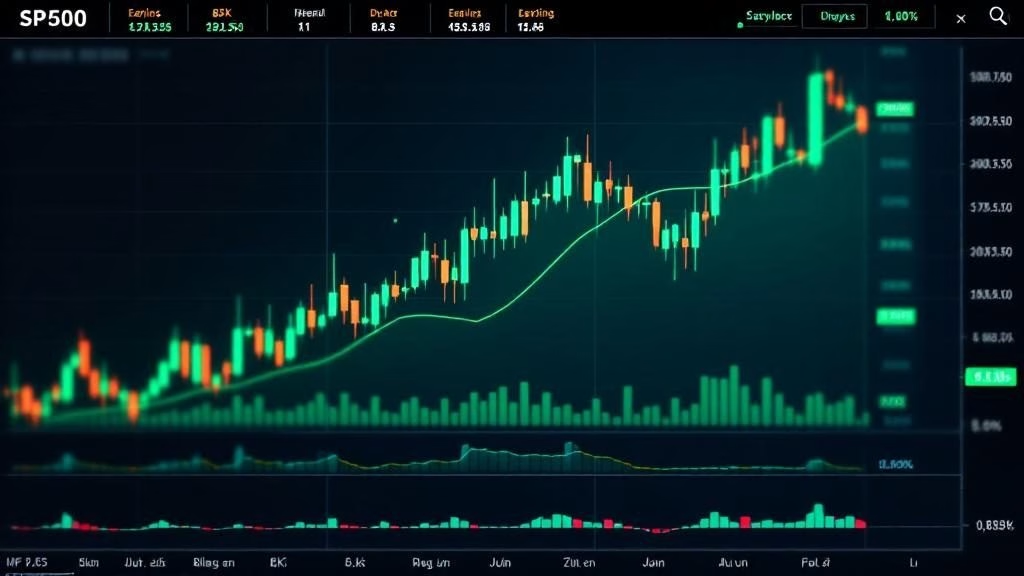
SP500 Earnings Outlook: The Numbers Behind the Resilience
According to FactSet’s latest research, S&P 500 earnings per share are expected to grow 12-13% year-over-year in Q1 2026. This would represent the sixth straight quarter of double-digit earnings expansion — a streak not seen since the post-pandemic recovery period of 2021.
What makes this particularly impressive is the backdrop against which it’s happening. Oil prices have surged near $111 per barrel on concerns about the Strait of Hormuz, input costs have risen across multiple sectors, and consumer sentiment has wobbled. Yet corporate America continues to find ways to grow the bottom line.
Several factors are driving this resilience:
- AI-driven productivity gains: Companies that invested heavily in artificial intelligence infrastructure throughout 2025 are now seeing measurable returns in efficiency and cost reduction.
- Strong labor market: The March jobs report showed 178,000 new positions added, keeping consumer spending elevated.
- Pricing power: Many large-cap companies have demonstrated the ability to pass higher costs to consumers without significantly damaging demand.
- Technology sector earnings: Despite a five-month losing streak in tech stocks, actual earnings from major technology firms have beaten expectations.
How Geopolitical Shocks Typically Affect Earnings Seasons
History provides useful context for understanding the current environment. Research from Reuters and Deutsche Bank shows that geopolitical shocks typically cause short-term market disruptions of around 4-6%, followed by recoveries within three to six weeks once uncertainty begins to resolve.

The Russia-Ukraine conflict of 2022 offers the most recent parallel. When Russia invaded Ukraine, the S&P 500 dropped sharply but bottomed out on March 8, 2022, before rebounding roughly 9% by month’s end. The key lesson: markets digest geopolitical risks faster than most investors expect, especially when corporate earnings remain solid.
Professor John Bai of Northeastern University’s D’Amore-McKim School of Business explains this dynamic: “The market doesn’t fear negative news per se. What the market really fears the most is uncertainty. Once the trajectory of a conflict becomes clearer and risks are priced in, markets stabilize and often rebound.”
This week’s price action demonstrated exactly that pattern. After the S&P 500 approached correction territory (down nearly 9% from its January highs), a sharp rally on Tuesday saw the Dow surge 1,100 points on ceasefire hopes. The Nasdaq, S&P 500, and Dow all snapped five-week losing streaks, gaining 4.4%, 3.4%, and 3.0% respectively over just four trading sessions.
Sector-by-Sector Earnings Expectations for Q1 2026
Not all sectors are benefiting equally from the earnings resilience. Here’s how the landscape looks heading into earnings season:
Technology
Tech earnings remain the backbone of S&P 500 growth. Despite stock price weakness, companies like Palantir have seen renewed investor optimism following major AI defense deals and explosive commercial growth. The Intel fab buyback deal worth $14.2 billion further signals that AI infrastructure spending is accelerating, not decelerating.
Energy
Energy companies are the clearest beneficiaries of the Iran conflict. With oil prices elevated near $111, major producers are expected to report windfall profits. However, as our analysis of the Hormuz crisis details, there’s a delicate balance — sustained high oil prices could eventually weigh on consumer spending and drag on broader earnings.
Defense
Interestingly, defense stocks have not seen the sustained boost many expected. Reuters reports that earnings estimates for General Dynamics, Lockheed Martin, Northrop Grumman, L3Harris, and RTX have not been significantly revised upward despite the ongoing conflict. The market appears to be pricing in a relatively contained engagement rather than a prolonged escalation.
Consumer Discretionary
This sector faces the most headwinds. RH (formerly Restoration Hardware) saw its stock plunge 22% after reporting mixed results, and rising fuel costs are beginning to squeeze household budgets. However, the strong jobs market is providing an important floor for consumer spending.

The Bull Case vs. The Bear Case
Why Bulls Remain Confident
Forward 12-month profit estimates were revised upward again in March, according to data tracked by multiple Wall Street banks. A median year-end 2026 target of 7,500 for the S&P 500 — representing roughly 10% upside from recent levels — reflects the consensus view that earnings growth will ultimately power stocks higher once geopolitical headwinds fade.
Goldman Sachs has been particularly optimistic, pointing to the combination of AI-driven productivity, resilient consumer spending, and the potential for a ceasefire resolution to unlock significant upside.
Why Bears Are Growing Concerned
Société Générale strategist Albert Edwards has warned that the earnings pillar “might be starting to wobble.” His concern centers on the second-order effects of sustained conflict: higher energy costs feeding into inflation, potential Fed rate hike delays, and the risk that consumer confidence — already fragile — could crack under prolonged uncertainty.
There’s also the question of whether current earnings estimates fully reflect the disruption caused by the conflict. Many Q1 earnings reports will cover a period when the war was still in its early stages, meaning the full economic impact may not show up until Q2 results.
What Investors Should Watch in the Coming Weeks
As Q1 2026 earnings season officially kicks off in mid-April, several key metrics will determine whether the SP500 earnings outlook remains robust:
- Earnings beat rate: In recent quarters, roughly 75% of S&P 500 companies have beaten estimates. A significant drop below this level would signal genuine deterioration.
- Forward guidance: More important than backward-looking results is what CEOs say about Q2 and the rest of 2026. Watch for language around supply chain disruptions, energy costs, and demand softening.
- Revenue growth vs. margin expansion: Earnings growth driven by cost-cutting (margin expansion) is less sustainable than growth driven by genuine revenue increases. Investors should track both metrics carefully.
- Oil price trajectory: If oil sustains above $100, it becomes an increasingly meaningful drag on earnings for non-energy companies. A ceasefire that brings oil back below $90 would be significantly bullish.
- Consumer spending data: Weekly retail spending and credit card data will provide real-time signals about whether the jobs market strength is translating into continued consumption.
Historical Precedent Favors the Bulls
Looking at 30 major geopolitical events since 1939, Deutsche Bank Research found that stocks typically fall about 6% in the first three weeks of a geopolitical shock before recovering completely in the following three weeks. We are now past the five-week mark of the Iran conflict, and the recent bounce suggests markets may be entering the recovery phase.
The S&P 500’s ability to maintain double-digit earnings growth through this crisis speaks to the underlying strength of corporate America. While volatility will likely persist — especially around Trump’s ongoing war communications and oil price fluctuations — the earnings picture remains fundamentally constructive.
For long-term investors, the current environment may represent an opportunity rather than a threat. War-driven selloffs have historically been buying opportunities, and with earnings growth projections still firmly in double digits, the fundamental case for stocks remains intact. The key is patience and discipline — avoiding panic selling during headlines and focusing on the earnings data that ultimately drives long-term stock performance.
Markets reopen on Monday, April 6, with investors eyeing the week ahead for potential ceasefire developments and the unofficial start of earnings season. The SP500 earnings outlook may face its biggest test yet — but history and data suggest it will pass.