


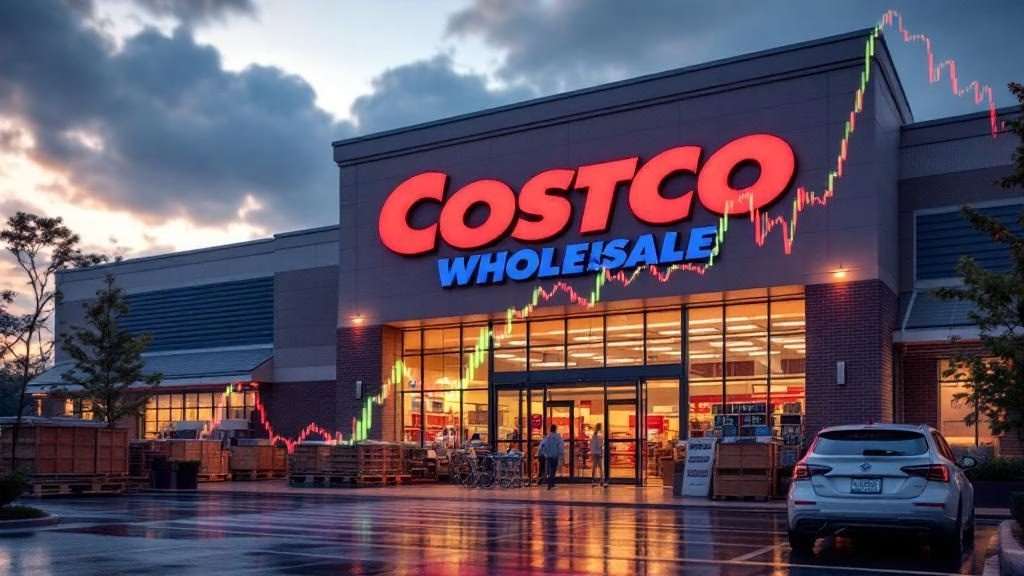

Costco earnings Q2 2026 delivered another impressive performance as the warehouse retail giant reported revenue of $69.6 billion and earnings per share of $4.58, beating Wall Street estimates on both metrics. The results arrived at a turbulent time for markets, with the Dow Jones plunging nearly 800 points on Thursday amid surging oil prices and geopolitical tensions. Yet Costco’s resilience underscores why the membership-based retailer continues to defy broader economic headwinds.
Comparable sales rose 7.4% year-over-year, driven by strong international performance and steady domestic traffic. February net sales alone reached $21.69 billion, a 9.5% increase from the prior year. With COST shares having recently crossed the $1,000 milestone, investors are now debating whether the stock’s premium 50x valuation is justified or stretched.
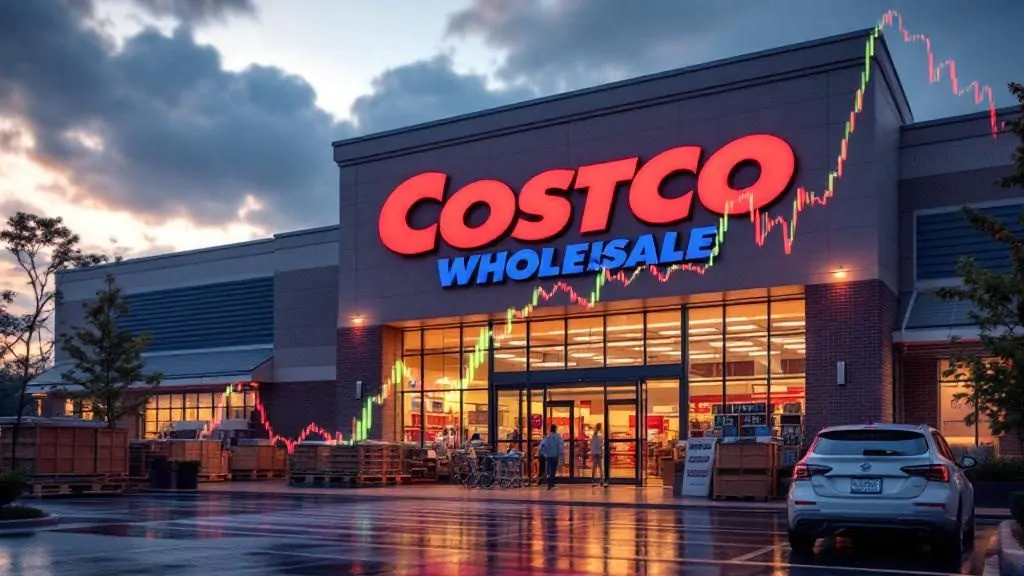
Costco Earnings Q2 2026: Revenue and EPS Beat Estimates
Costco Wholesale Corporation (NASDAQ: COST) reported its fiscal second-quarter results after the market close on Wednesday, March 5, 2026. Total revenue came in at $69.60 billion, surpassing analyst expectations of $69.29 billion according to Benzinga. Diluted earnings per share hit $4.58, edging past the consensus estimate of $4.57.
While the beats were narrow, they continue a long streak of Costco meeting or exceeding expectations. Revenue grew 9.22% year-over-year, while EPS climbed 13.93% compared to Q2 2025. The company’s membership model provides a stable revenue base that most traditional retailers simply cannot match.
Net income for the quarter came in strong, supported by membership fee revenue that continues to climb. Costco raised its annual membership fee in September 2024 for the first time in seven years, and renewal rates have remained above 90% — a testament to the value proposition the company offers its 130+ million cardholders worldwide.
Comparable Sales Growth Tells the Real Story
The headline number that caught analysts’ attention was the 7.4% comparable sales growth. This metric strips out the impact of new store openings and currency fluctuations, providing a cleaner picture of organic demand. International comparable sales were particularly strong, as consumers outside the United States increasingly embrace the warehouse shopping model.
In the United States, comparable sales grew at a healthy pace despite rising consumer caution around discretionary spending. Costco’s ability to offer bulk pricing on essentials — from groceries to household goods — makes it a natural destination when households feel squeezed by inflation. With oil prices surging past $80 per barrel this week due to the Iran-Hormuz crisis, consumers may tighten budgets further, which could actually benefit value-oriented retailers like Costco.

How Costco Stacks Up Against Retail Peers
Costco’s results look even more impressive when compared to its retail peers. Walmart (WMT) stock has declined 3.5% year-to-date as investors rotate out of consumer staples. Target (TGT) has faced ongoing margin pressure from inventory challenges. Meanwhile, Burlington Stores (BURL) surged 6.7% after its own earnings beat on March 5, and Kroger (KR) advanced 5.3%.
The divergence within the retail sector highlights an important trend: consumers are becoming increasingly selective about where they spend. Warehouse clubs and discount retailers are winning share, while mid-market department stores and specialty retailers struggle to maintain traffic. This bifurcation is likely to accelerate if energy costs continue pushing up the prices of everyday goods.
Ross Stores (ROST) also reported strong results this week, with shares surging 8%. The off-price retail segment, alongside warehouse clubs, appears to be the segment best positioned for a higher-inflation environment. Investors seeking retail exposure should consider this structural shift carefully.
The $1,000 Stock Price Debate
Costco shares recently crossed the $1,000 mark for the first time, pushing the company’s market capitalization above $440 billion. At roughly 50 times trailing earnings, COST trades at a significant premium to the S&P 500 average of approximately 22x. This valuation has sparked a heated debate among market participants.
Bulls argue that Costco’s membership model creates recurring revenue with extraordinarily high retention rates, making it more comparable to a subscription-based technology company than a traditional retailer. The predictability of membership fees, combined with steady same-store sales growth and international expansion opportunities, justifies a premium multiple.
Bears counter that no retailer, regardless of quality, deserves a 50x earnings multiple when growth rates are in the single digits. They point to the recent PPI inflation data and the risk that rising costs could compress margins even for efficient operators like Costco. A broader market correction driven by geopolitical events could also bring high-multiple stocks back to earth.
Oil Prices and Inflation: What It Means for Costco
The timing of Costco’s earnings report is particularly noteworthy given the dramatic backdrop in energy markets. Brent crude briefly touched $82 per barrel this week — a 14-month high — as the Strait of Hormuz crisis disrupted global oil flows. The Reuters reported that UBS now expects Brent to average $80 per barrel in March, well above prior forecasts.
Higher oil prices feed directly into transportation and logistics costs, which represent a meaningful expense for any large-scale retailer. Costco operates over 890 warehouses globally and relies on an extensive distribution network. If crude remains elevated, the company will face higher shipping costs that could eat into margins.
However, Costco has historically demonstrated strong pricing power and supply chain efficiency. The company’s direct-sourcing model and limited SKU count (around 4,000 items compared to 30,000+ at a typical supermarket) allow it to negotiate aggressively with suppliers and pass savings to members. This structural advantage becomes even more valuable during inflationary periods.
According to CNBC, the Dow tumbled nearly 800 points on Thursday as oil-fueled inflation fears gripped markets. In this environment, Costco’s defensive characteristics — essential goods focus, membership loyalty, and value positioning — make it an attractive holding for portfolio protection.

E-Commerce and Digital Growth Acceleration
One area where Costco continues to close the gap with competitors is e-commerce. While the company has traditionally been a laggard in online retail compared to Amazon and Walmart, recent investments in digital infrastructure are paying off. E-commerce comparable sales grew in the double digits for the quarter, with particular strength in same-day delivery through Instacart partnerships and the company’s own app.
Costco’s e-commerce strategy differs from its peers in a meaningful way. Rather than trying to compete head-on with Amazon’s vast marketplace, Costco focuses on curated online offerings that complement the in-store experience. Big-ticket items like furniture, electronics, and appliances sell particularly well online, while groceries and everyday essentials continue to drive warehouse foot traffic.
The company also announced plans to expand its Costco Logistics division, which handles last-mile delivery for large items. This vertical integration mirrors Amazon’s playbook and should improve delivery times while reducing third-party shipping costs over time.
International Expansion: The Next Growth Engine
With over 890 warehouses globally, Costco still has significant room to expand internationally. The company operates in 14 countries, but penetration rates outside North America remain relatively low. Japan, South Korea, and Australia have shown strong comparable sales growth, while newer markets in China and Europe represent untapped potential.
Costco opened its first store in mainland China in Shanghai in 2019, and the response was overwhelmingly positive. The company has since expanded to multiple Chinese cities and plans to accelerate openings. Given China’s growing middle class and appetite for quality goods at competitive prices, the Chinese market alone could add meaningful revenue over the next decade.
In Europe, Costco’s presence remains limited primarily to the United Kingdom, France, Spain, and Iceland. Germany, Italy, and the Nordics represent obvious expansion targets where the warehouse model could disrupt established grocery markets. Each new international warehouse typically reaches profitability within 2-3 years, making the economics of expansion compelling.
Outlook and What to Watch Next Quarter
Looking ahead, several factors will determine whether Costco can maintain its growth trajectory. First, the trajectory of energy prices will directly impact both the company’s operating costs and consumer spending power. If oil remains above $80 for an extended period, expect some margin compression, though Costco’s efficient model should limit the damage.
Second, the Federal Reserve’s response to the inflation resurgence will be crucial. Markets had been pricing in rate cuts for 2026, but the combination of sticky inflation and an energy shock has pushed those expectations further out. Higher-for-longer interest rates could weigh on consumer confidence and spending, though value retailers like Costco tend to benefit from trade-down behavior during tough times.
Third, membership growth and renewal rates will be closely watched. The recent fee increase hasn’t dented retention so far, but consumer fatigue in a prolonged inflationary environment could eventually take a toll. Costco’s management remains confident that the value proposition is strong enough to maintain 90%+ renewal rates regardless of the macro backdrop.
For investors, Costco remains a high-quality franchise trading at a premium price. The Q2 2026 results confirm the business model’s durability, but the stock’s elevated multiple leaves little room for disappointment. In the current volatile market environment, COST offers a blend of defensive positioning and steady growth that few other stocks can match — but timing entry points carefully remains essential.