
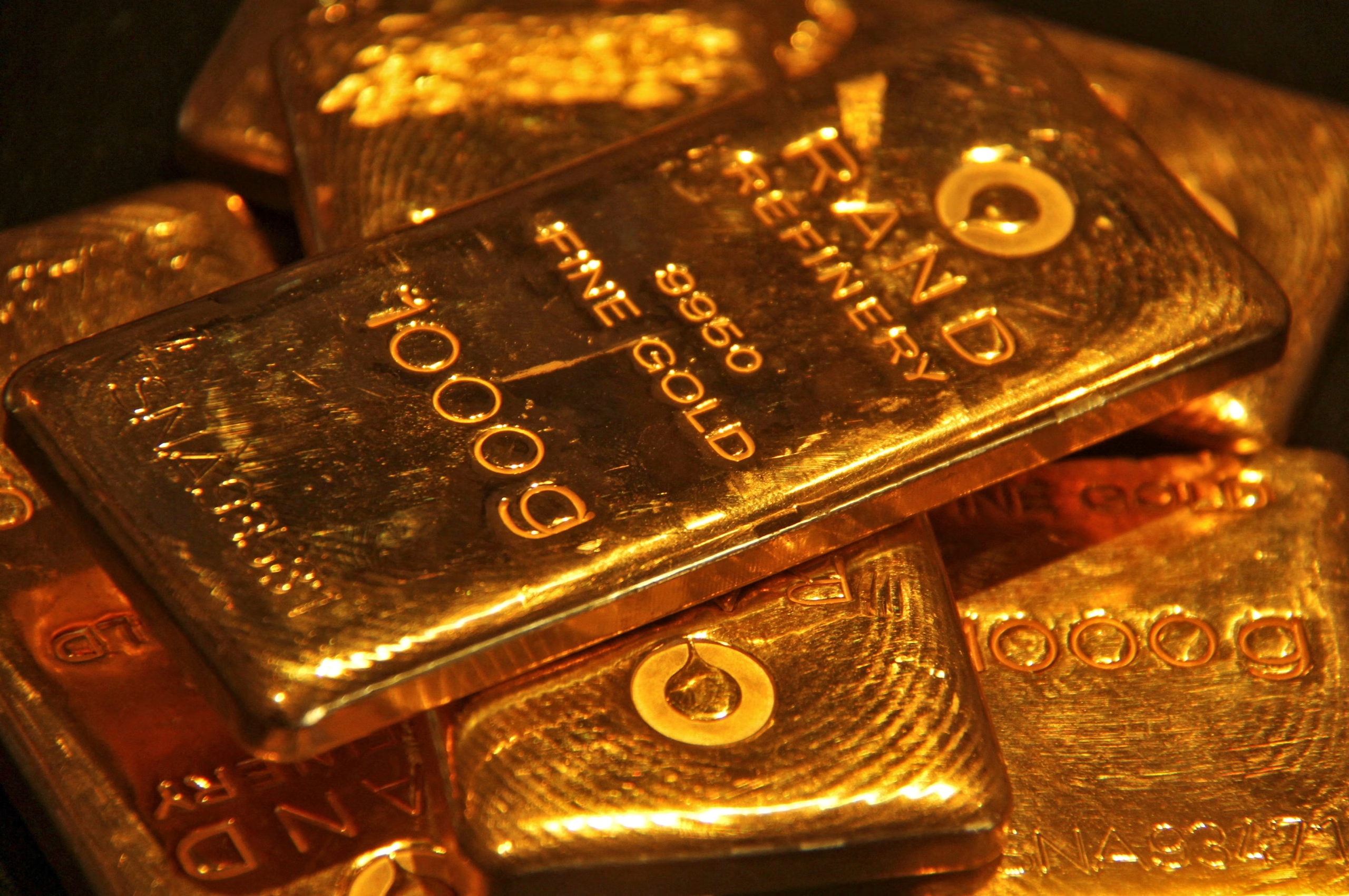

Gold has always been a symbol of wealth and a hedge against uncertainty. In recent years, with growing global inflation, economic instability, and geopolitical tensions, gold has regained attention from investors. Whether you’re an individual investor, financial analyst, or market enthusiast, understanding the gold price forecast can help you make more informed financial decisions.
In this article, we’ll explore expert predictions, key market influences, and what factors are likely to shape the price of gold in 2025 and beyond.
Why Gold Matters to Investors
Gold is more than just a precious metal used in jewelry—it’s also a store of value, a safe-haven asset, and a hedge against inflation. Historically, when equity markets stumble or currencies weaken, gold tends to gain ground. In times of war, recession, or banking instability, gold often shines.
Investors buy gold to:
- Diversify portfolios
- Preserve capital during market downturns
- Hedge against currency devaluation and inflation
Given its role as a financial stabilizer, many turn to gold price forecasts to anticipate future market behavior.
Gold Price Performance in Recent Years
Before looking ahead, it’s helpful to understand how gold has performed:
- 2020:
Gold hit an all-time high of over $2,060 per ounce during the height of the COVID-19 pandemic due to economic uncertainty and massive stimulus packages.
- 2021:
Prices hovered around $1,800–$1,900 per ounce as markets began to stabilize but inflation fears emerged.
- 2022–2023:
Gold faced some pressure due to rising interest rates but remained resilient due to ongoing inflation and geopolitical concerns.
- 2024:
Gold briefly surged past $2,300 amid global unrest and central bank purchases, ending the year around $2,150.
This historical perspective sets the stage for the 2025 gold price forecast.
Gold Price Forecast for 2025
Expert Predictions
Various institutions and analysts have released their gold price outlooks for 2025. Here’s a summary:
- Goldman Sachs:
Forecasts gold to reach $2,500 per ounce, citing persistent inflation, strong demand from central banks, and slower interest rate hikes.
- World Bank:
Offers a conservative estimate of around $2,100 per ounce, reflecting stable long-term growth.
- JP Morgan:
Predicts gold could surge toward $2,600 if the U.S. dollar weakens significantly and geopolitical risks increase.
- Citibank:
Bullish scenario of $2,700 per ounce if global economies slide into recession.
While predictions vary, there is a common trend: analysts generally expect gold to continue its upward trajectory in 2025.
Key Factors Influencing the Gold Price Forecast
Gold doesn’t move in isolation. Its price is driven by a mix of economic, geopolitical, and market-specific factors. Let’s break down the key drivers that will shape the gold price forecast in 2025:
1. Interest Rates and Central Bank Policies
Gold typically has an inverse relationship with interest rates. When rates rise, the opportunity cost of holding non-yielding assets like gold increases. Conversely, falling or steady rates make gold more attractive.
- If central banks cut rates in 2025, gold prices may rally.
- If rates remain high, it may cap gold’s upside, but continued inflation could still support demand.
2. Inflation Trends
High inflation boosts gold demand as a hedge. Although inflation started to cool in late 2024, sticky core inflation in key economies like the U.S. and Eurozone may persist.
- If inflation remains elevated, gold prices are likely to rise further.
3. U.S. Dollar Strength
Gold is priced in U.S. dollars. When the dollar weakens, gold becomes cheaper for non-dollar investors, increasing demand.
- Forecasts of a weakening dollar in late 2025 due to dovish Federal Reserve policy could push gold higher.
4. Geopolitical Tensions
Conflict in Ukraine, rising tensions in the Asia-Pacific region, and political instability in key countries are all contributing to market uncertainty.
- Geopolitical instability boosts safe-haven demand for gold, making it a critical factor in bullish forecasts.
5. Demand from Central Banks and Retail Investors
Central banks, especially from emerging markets like China, India, and Russia, are increasing gold reserves to reduce reliance on the dollar.
- This institutional demand strengthens gold’s long-term price floor.
Meanwhile, growing interest from retail investors, particularly through ETFs and digital gold platforms, is supporting liquidity and volume.
Technical Analysis: Charting the Path Forward
From a technical perspective, analysts look at gold’s price charts to identify patterns and potential breakout levels.
- Support level:
$2,000–$2,050 (strong buying interest zone)
- Resistance level:
$2,400–$2,500 (key breakout point)
- Bullish breakout scenario:
A sustained move above $2,500 could open the door to $2,700 or higher.
- Bearish correction scenario:
A drop below $2,000 might indicate short-term profit-taking but wouldn’t necessarily end the uptrend.
Indicators such as RSI (Relative Strength Index), MACD (Moving Average Convergence Divergence), and Fibonacci retracement levels are commonly used in forecasting gold’s movement.
Should You Invest in Gold in 2025?
Whether you’re a long-term investor or a short-term trader, gold can play a valuable role in your portfolio. Here’s how:
Long-Term Investors:
- Consider gold as a diversification tool.
- Allocate 5–10% of your portfolio to gold through ETFs, physical bullion, or mining stocks.
- Use dollar-cost averaging to minimize timing risk.
Short-Term Traders:
- Use technical signals and macroeconomic news for entry and exit points.
- Monitor interest rate trends, inflation data, and global events closely.
- Stay updated with central bank policies and economic releases.
Risks to Watch
While the outlook for gold remains strong, it’s important to be aware of potential risks:
- Stronger-than-expected economic recovery could shift funds back into equities.
- Sudden interest rate hikes might reduce gold’s appeal.
- Strengthening U.S. dollar could limit global demand.
Diversification and disciplined risk management are crucial for navigating these uncertainties.
Conclusion:
Gold’s Golden Outlook
The gold price forecast for 2025 points toward continued strength, driven by macroeconomic instability, central bank demand, and inflation hedging. While short-term fluctuations are inevitable, the long-term trend appears bullish according to most experts.
Whether you’re hedging against economic uncertainty or looking for growth opportunities, gold remains a reliable asset in the financial world. As with any investment, do your research, stay updated on global trends, and tailor your strategy to fit your financial goals.

Tradingmarketsignals serves as the definitive digital ecosystem for the modern wealth management community. As a premier source of intelligence, it delivers high-level analysis, regulatory updates, and technological insights tailored specifically for independent financial advisors, RIA leaders, and investment professionals.